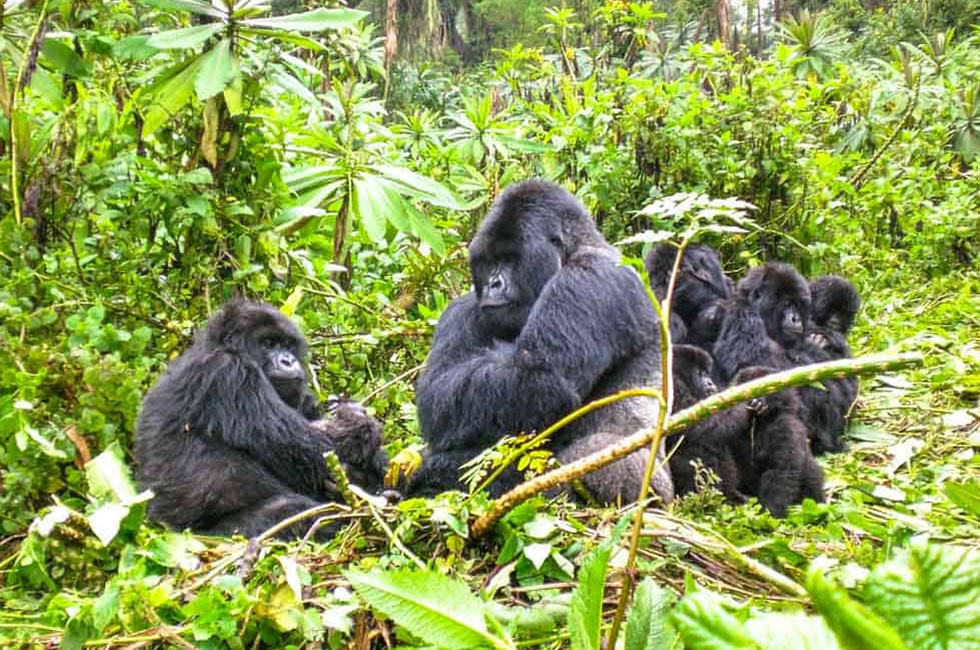
Philemon Mujuni used to be a poacher. He thought of gorillas as hostile animals. You should kill them before they kill you, he believed. Now he and other former poachers help protect Uganda’s mountain gorillas. An unexpected force turned these hunters into helpers: tourism.
Half the world’s mountain gorillas live in Uganda. Many of those live in Bwindi Impenetrable National Park. The International Union for Conservation of Nature considers the gorillas endangered. It used to consider them critically endangered—one step above extinct. Hunters and human encroachment played a part in that decline.
But now those same forces help the gorillas thrive.
Ranger-guides lead park tours, cutting paths through the brush with sickles. Porters help carry tourists with physical limitations through the undergrowth for a fee of about $300. Foreign tourists pay $800 in permit fees just to see the gorillas in their natural habitat. But $10 of each permit goes back to nearby communities. These communities also receive 20% of all park entry fees.
In this way, tourism creates an economic incentive for local communities to care for the creatures. The locals have even given the gorillas names.
“If we know there is a gorilla that is sick, you see everyone is concerned. ‘Why? Why is the gorilla sick? It’s suffering from what?’” says Joyleen Tugume, a ranger-guide at Bwindi. “Even the community people. Everyone is touched.”
These incentives also encourage former poachers to become protectors.
“We get some money from these gorillas we could kill,” says Mujuni. He and 128 other reformed poachers formed a watchdog group. Members look for people going into the woods to set traps. Their work supports the official armed rangers who patrol the park.
Laws can discourage poaching with threats of fines or imprisonment. But many rural Ugandans struggle with hunger and poverty. Poaching can look like a quick way to gain food or money. By sharing the wealth from tourism, officials don’t just discourage crime. They encourage everyday people and would-be poachers to help.